How biochar affects soil - Scientists from Jimma University and DBFZ conduct soil moisture tests with sensors
16.07.2026
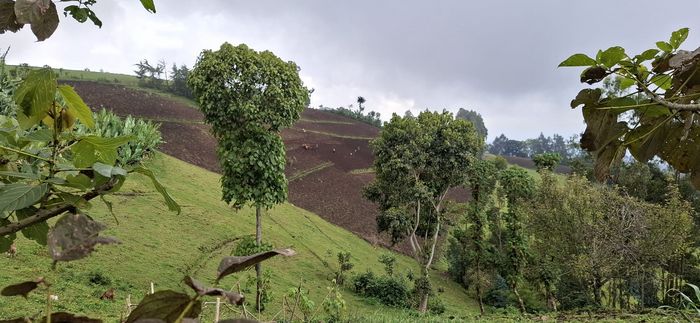
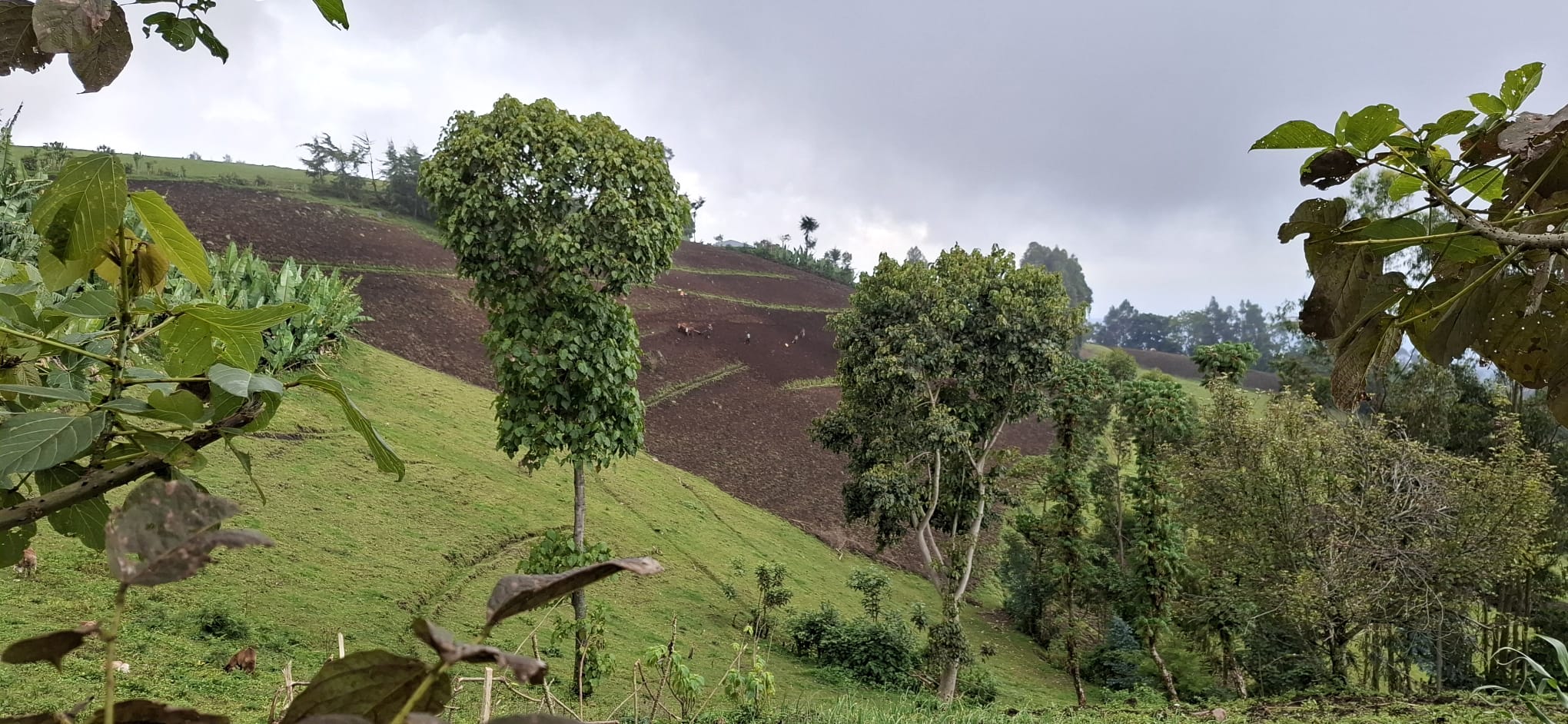
In June 2026, Germany recorded an average rainfall of 66 litres per square metre. In the Jimma district of Ethiopia, between 216 and 244 litres per square metre fall each month from April to September. In the hilly landscape of Jimma, this heavy seasonal rainfall can wash nutrients out of the soil and increase the risk of erosion. This makes biochar particularly important: combined with organic fertilisers, it acts like a sponge, retaining both nutrients and moisture in the soil.
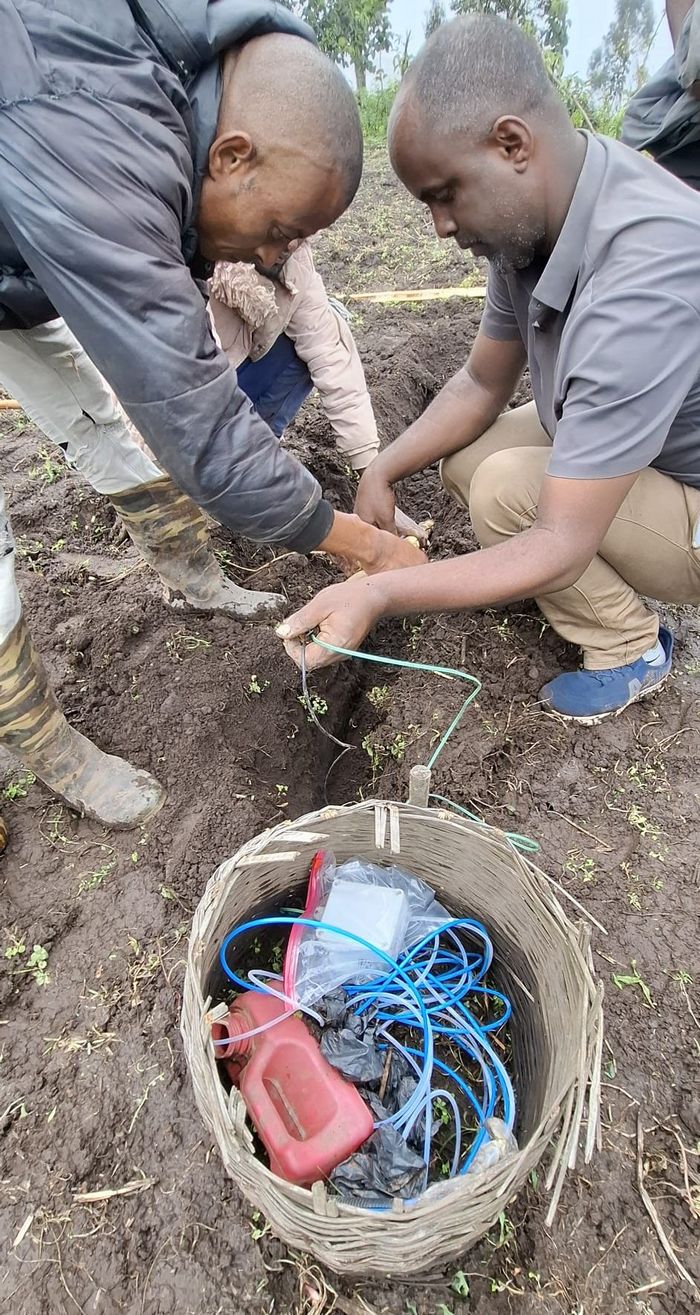
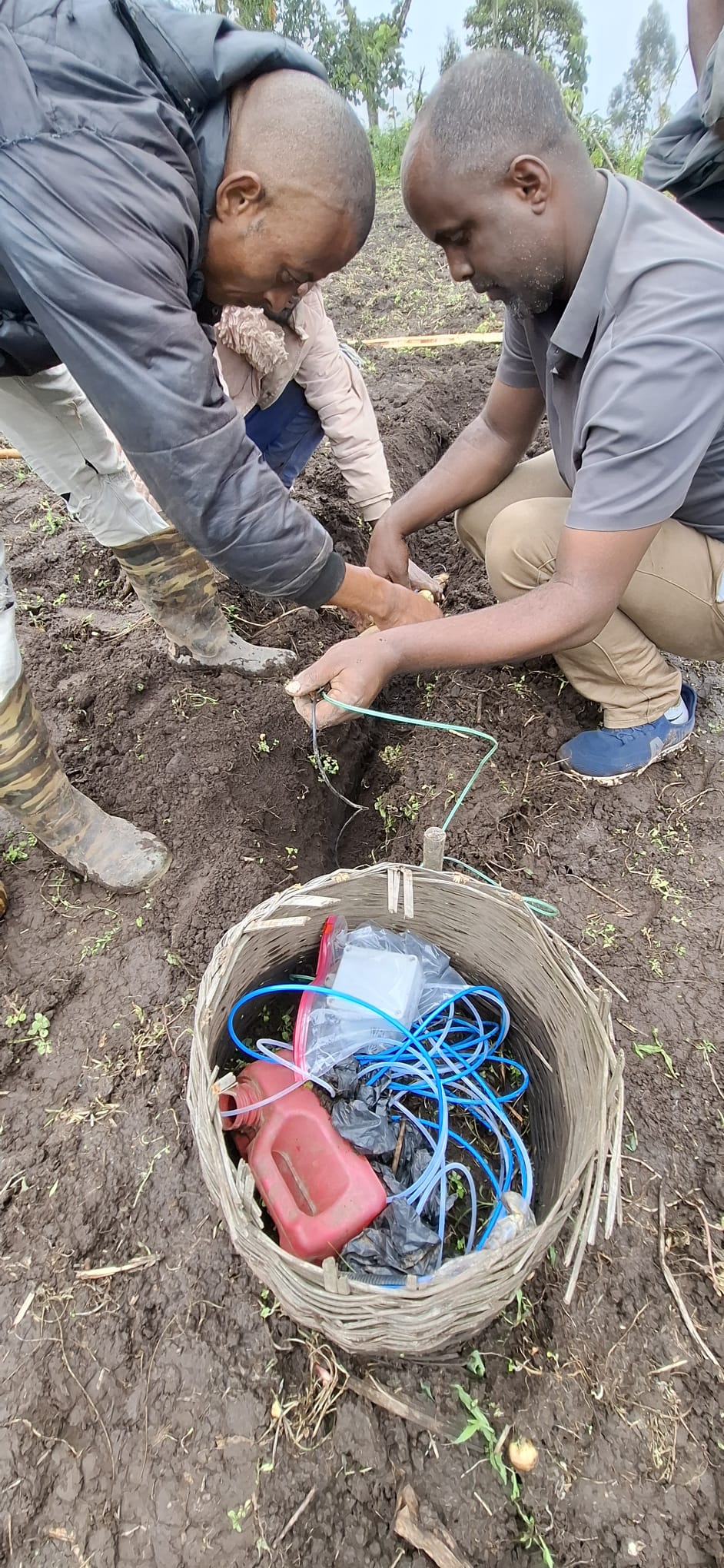
A team of scientists from Jimma University and the DBFZ is using sensors to measure exactly how much moisture remains in the soil. In July, Dr Abebe Nigussie, Dr Milkiyas Ahmed, Dr Burkhard Wilske and Dr Konrad Siegfried supervised the installation of the sensors on ETH-SOIL’s soil monitoring test plots. The continuous sensor data now provide a direct comparison of soil moisture in fields treated with biochar-based fertilisers and neighbouring fields treated with synthetic fertilisers. This adds another element to the systematic impact analysis carried out since 2024, which combines nutrient data from soil samples with measurements of biomass and crop yields.
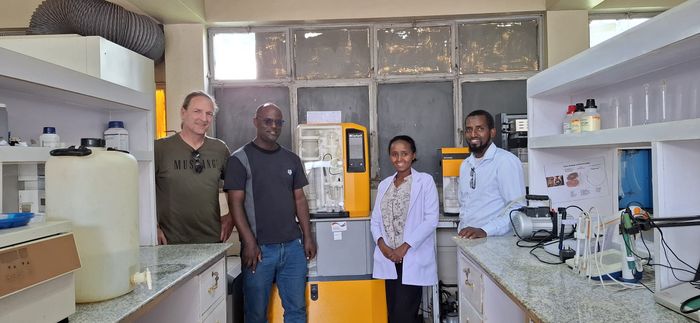
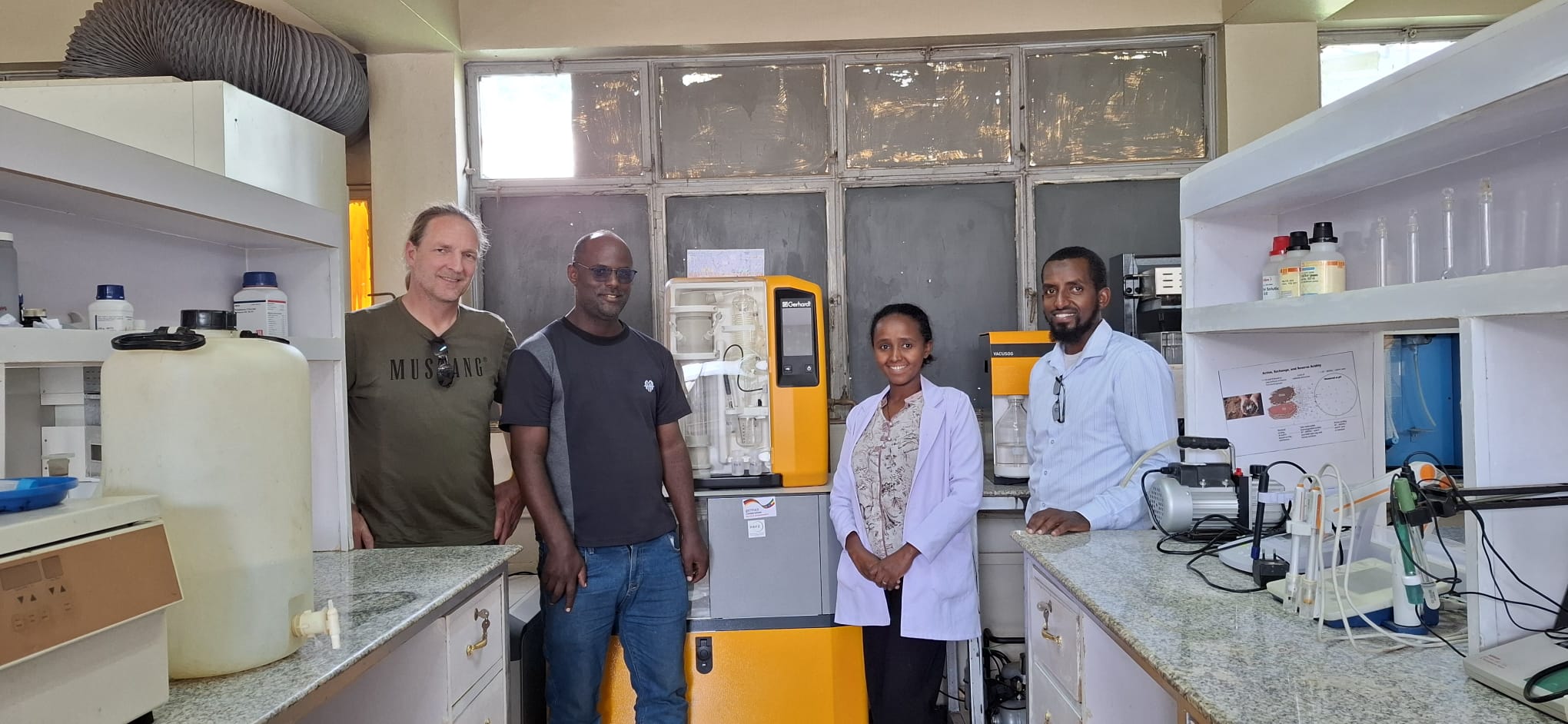
Meanwhile, the final equipment needed to modernise the facilities has arrived at the laboratory of the Faculty of Agriculture at Jimma University. Analog to the other components of ETH-SOIL, the scientific findings will contribute to recommendations for the Oromia Regional Government and the Ethiopian Ministry of Agriculture.